
The Watchlist: Western Masculinity
THE COWBOY AS A SYMBOL: Red River, Big Country, Midnight Cowboy

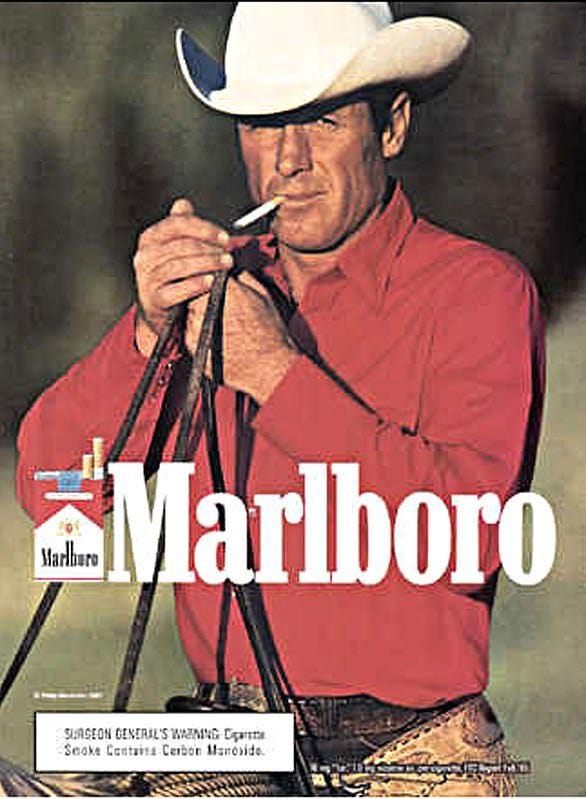
It’s the story that has captivated America: The cowboy tames the rugged land and brings it to heel, living off the land through frontier independence and self-reliance. But something changed after World War II, when a structurally pastoral and agrarian society experienced a fluke 20-year period of unprecedented capital accumulation, a rapid technological upswing that dumped space travel, computers, industrial supply chains, and TVs onto Americans like a load of bricks. The cowboy as a symbol underwent a profound transformation, reflecting broader anxieties about identity, gender, and national mythology. Though different in tone and setting, Red River, The Big Country, and Midnight Cowboy form a revealing arc that charts the cowboy’s journey from mythic patriarch to contested ideal to a fragile performance struggling to survive in a rapidly changing America.
Emerging in the aftermath of World War II, Red River presents the cowboy at the height of his symbolic power, engaged in a sweeping and relentless cattle drive that reinforces the frontier as a space where masculine authority is forged and tested. The film’s central conflict—between a domineering patriarch and his more humane surrogate son—captures a moment when the cowboy still embodied national strength, even as cracks in that facade began to reveal the ugly, sneering face of ruthless livestock capitalism. A decade later, The Big Country signals a cultural shift, even if it’s still rooted in Western iconography. It challenges the traditional cowboy default of machismo posturing by contrasting violent, honor-obsessed masculinity with a more gentle and even-keeled alternative, suggesting that the traditional rituals of toughness and bravado have become hollow, revealing a society increasingly skeptical of the very traits that once defined the cowboy hero. By the time Midnight Cowboy arrived at the end of the counterculture era, the myth had unraveled. Joe Buck’s cowboy persona—bright boots, fringed jacket, and a big hat—no longer marked a rugged independence, but a costume masking insecurity and dislocation. Set not on the open range but in the alienating streets of New York City, the film exposes the cowboy as a relic of a fading cultural imagination. Masculinity itself appears unstable, performative, and vulnerable, mirroring a decade marked by social upheaval, shifting gender roles, and widespread disillusionment with America’s mythical self-conception.
Taken together, these films reveal how mid‑century America renegotiated its ideals of manhood, using the cowboy as the barometer of those changes.
Anyways, let’s get to it…
(SPOILERS AHEAD)
Red River (1948)
DIRECTED BY: Howard Hawks
SCREENPLAY BY: Borden Chase, Charles Schnee (Based onThe Chisholm Trail by Borden Chase)
CINEMATOGRAPHY: Russell Harlan
EDITED BY: Christian Nyby
MUSIC BY: Dimitri Tiomkin
STARRING: John Wayne, Montgomery Clift, Walter Brennan, Joanne Dru, Harry Carey Sr., Coleen Gray, John Ireland, Noah Beery Jr., Harry Carey Jr., Paul Fix
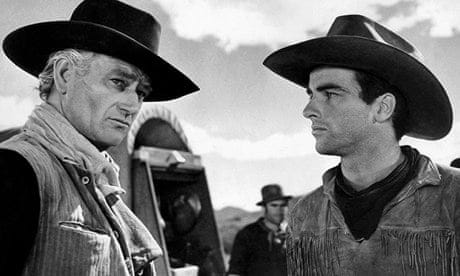
Out of all the iconic Westerns, Red River is one of the few that was actually about cowboys and their cattle. Many films in the genre are self-consciously conceived on such a panoramic scale, but this actually feels like an ancient epic. Shots are measured in long breaths, but for the hundreds of cattle that roam along in unison, this great drive along the Chishol Trail never feels cumbersome. It’s a saga dramatized through the struggle between Thomas Dunson, a bull-headed and increasingly tyrannical rancher, and his adopted son Matthew Garth, but the monotony of the inexorable slow progression provides an energizing bass pattern that sets the tone and pace. There’s a steadiness of emphasis throughout this mission, a sense of movement and emotions held in check by what has to be done. When a violent outburst or a hard-boiled madness surfaces, it’s even more jolting. The film’s iconic visual force leverages weather, space, and gorgeously brutal landscapes to illustrate the extraordinary effort to marshal cattle across an immense expanse of punishing and threatening terrain. Soul-stirring melodrama and tear-jerking grandiosity are ironically avoided throughout this spatial sprawl, and instead, we get a stoic and unsentimental comedy.
Dunson is relentlessly driven to build a cattle empire in Texas and brooks no obstacles. He takes leave of the woman he loves (Fen), who then falls victim to an Indian massacre. He’ll slaughter anyone who contests his right to the land he settles on, starting with an agent of its ostensible and faraway Mexican owner. With his sidekick Grook, and a young Matthew, the orphaned lone survivor of the same massacre that killed Fen, Dunson creates something like his own polity south of the Red River. Fourteen years pass and by 1865, he now oversees a vast herd of 9,000 steers, but is economically devastated by the collapse of the Southern economy in the Civil War. He opts to embark on a thousand-mile cattle drive through the dangerous territory of Missouri, where he believes he can sell them for a hefty profit.
The drive becomes the movie, and Dunson transforms into a figure of Ahab-like implacability, pushing his men beyond endurance. His failures as a leader become increasingly unignorable: He is moody, distrustful, quick to anger, and excessive in his punishment of his men’s attempts to abandon the mission. After a series of escalating incidents that put the whole journey into jeopardy, Matthew, who Dunson raised as his own son, reluctantly seizes control of the enterprise and leaves his wounded surrogate father in the wilderness. Backed by the rest of the crew, Matthew changes course to the more desirable destination of Abilene, Kansas—where a new rail line has opened. He drives at the same brutal pace, albeit with a more reasonable leadership style. He is the son who rebels against his father, not out of animosity but a pragmatic sense of what is best for the mission. Matthew represents something new, an abandonment of benevolent deposition and toward a leadership of consensus. So this crew of weathered veteran cowboys go on, terrified that Dunson is relentlessly tailing them, determined to act on his promises to kill Matt and anyone who gets in his way. As he lurks behind, Dunson descends into booze-fueled, sleep-deprived madness.
As a vengeful Dunson finally catches up to the crew in Missouri, the stage is set for a traditional western duel and a melancholic resolution. But the final conflict is resolved through the intervention of a late-emerging character, Tess, a young woman Matthew rescued from yet another Indian attack, and pieces together the story of their relationship through separate encounters with Matthew and Dunson. In a screwball moment of surprise, just as the skirmish comes to blows, Tess storms into the midst of their showdown and delivers a tirade that essentially shames them into acknowledging their love for each other. It’s a jolting transition, from hyper-fragile machismo to a resolving of differences, a jump from one era to another. The ending may feel like a letdown because it wrenches the story away from the more devastating ending it seemed to be ratcheting up, since Dunson was deep in the throes of a self-destructive war path of testosterone fury. But their conflict is inherently stupid and had no reason to escalate to a near-fatal fight. The ending is corny, but it’s an endearing subversion of the typical rugged Western tropes. It comes full circle from the phallic one-upmanship between Matthew and Cherry comparing guns at the beginning: “That’s a good-looking gun… Can I see it?” “Maybe you’d like to see mine.”
It makes a strange sort of sense that the men would immediately stop their steakheaded violence at the behest of their vocal dude-rancher-gal. Male tensions are often resolved by a butting-in woman, and Tess was a fringe element of the plot, detached from the dark and torturous trek until this moment, resulting in pure Hawkesian comedy. This development is consistent with how director Howard Hawks views the gender war: Mismatched, ridiculous, usually ending with both parties (especially the men) falling flat on their faces. And there is something down-to-earth and bizarrely American about Tess. When she removes an arrow from her shoulder in such a non-plussed manner, it’s a triumph of both Hawksian proto-feminism and a very distinctly American sensibility. If the film hints at archaic tragedy, it’s the way that John Wayne projects Dunson’s hubris without melodramatic exaggeration. But it’s there from the start, and if he seems to change course throughout the film, it’s only because circumstances change around him and he refuses to recognize that. Embodying a gigantic force that cannot deviate from its determined course, he buries any contrary impulse he has to bury, wearing himself down before our eyes. The only blurring comes at the end when Tess forces him to realize that there is nowhere else for him to turn, and he finally registers the profound and abrupt change in perception.
If Druson represents the megalomaniac dreams of livestock capitalism, in which the ambitions are always ahead of the never-ending growth, then Matt presents an understanding of the limitations of such lofty dreams. Druson’s pioneer drive and his personal foibles drive his motives. He hails from a tradition that views life as a constant struggle: As he tells Don Diego’s lackeys, the Spanish stole land from the Native Americans, so the Yankees will seize the land from the Spanish. “We brought nothing into this world, and it’s certain we can carry nothing out,” he says, which seems to embody his belief that our legacy is defined by what we build on earth while we’re still alive. His need for a son is a desire for a heritage of his lineage, a confrontation with his mortality. Red River doesn’t concern itself with analyzing the terrifying culmination of frontier capitalism, but it is portrayed without any mythical illusions. The happy ending doesn’t smooth out the lurid paranoia and bloodshed that lie beneath the glorified fables of Manifest Destiny. When Druson offers Matt a more prominent role in the company, it remains unclear what kind of changes will transpire.
The austere grandeur of the early scene, the immense cattle herd springing from isolation and emptiness, Dunson’s kingdom is established by the crossing of a river and the shedding of blood. What he has sacrificed is symbolized by a serpentine bracelet that binds the whole film: Dunson received it from his grandmother, then he gives it to Fen and retrieves it from the dead body of the man who killed her, he passes it on to Matthew, Tess steals it from Matthew after they spent a night together, and she wears it when she meets with Dunson to persuade him not to kill his adopted son. The recurring imagery of the river, graves, and the serpent bracelet carries a folkloric quality. Things just happen as in the most ancient narratives: Abruptly and with inexplicable gaps in between. When Dunson shoots down the Mexican rider who attempts to evict him, it’s barely a note about moral ascendancy or the mission of civilization. In fact, the killings are sharp and swift. Dunson guns down three malcontents, both shockingly brutal and perversely elegant. But two acts of violence do not come to pass: The threatened horsewhipping of Bunk Kennelly for accidentally precipitating a stampede, and the announcement by Dunson–hobbling from a leg wound and dosing himself with whiskey–of his punishment for the recaptured deserters: “I’m gonna hang them.” It’s the sound of a degenerated authority, unaware that its moment has passed, his leadership no longer tolerable.
After the cattle have reached their destination, the cowboys can revert to a more comfortable mode. The drama is over, but the movement of the herd persists. Their slow and weighty progression, across plains and down slopes and through dense rain, is not the background of the movie but its essence. It draws such an accurate psychological portrait of national imagination and historical self-conception that the vastness of it all allows us to pretend that there is a never-ending sky above us, that our problems are dwarfed by the grandeur of the mountains and the expanse of the landscapes. The cattle pour last into the streets of Abilene, and we can just saddle our horse and ride off into the sunset.
The Big Country (1941)
DIRECTED BY: William Wyler
SCREENPLAY BY: James R. Webb, Sy Bartlett, Robert Wilder, Jessamyn West (Based on Ambush at Blanco Canyon by Donald Hamilton)
CINEMATOGRAPHY: Franz F. Planer
EDITED BY: Robert Belcher, John Faure, Robert Swink
MUSIC BY: Jerome Moross
STARRING: Gregory Peck, Jean Simmons, Charlton Heston, Carroll Baker, Burl Ives, Charles Bickford, Chuck Connors
Post-war America was a country in transition, as unprecedented capital and technology were dumped on an agrarian society like a load of bricks. The West represented the last bastion of outlaw rugged individualism before the Interstate system established a throughline to modernity. The Big Country is a proper western epic that serves as a character study on integrity and moral courage in the face of communal cowardice and groupthink, and it examines the interconnectivity of masculinity, social hierarchy, and national identity. As concepts of manhood and civilization evolve, the question of what it means to be a man living in America changes with it.
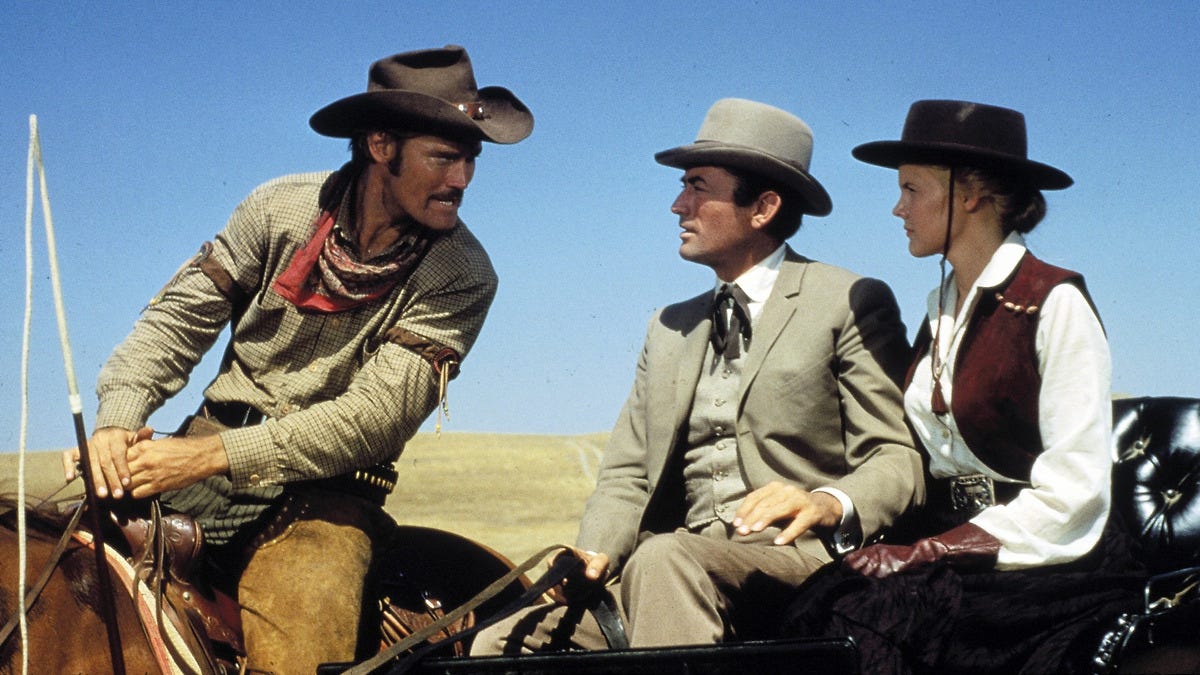
James McKay is a genteel city-boy and a former sea captain who moves to a rugged frontier town to marry his sweetheart, Patricia Terrill. He’s mocked for the way he dresses, even wearing the “wrong” hat, which was a loaded signifier of class and identity at the time. The Terrill family runs the town, but they defend it from the harassment of the Hannasseys, who live beyond the border in a small canyon village. James and Patricia ride through the countryside and are accosted by members of the Hannassey gang: While James endures it with a smile, Patricia draws a rifle. These are supposed to be the Bad Guys, but the Terrills have hazing rituals of their own; they respond to their rivals by sending a veritable war party on horseback to terrorize their encampment, and they prevent the Hannassey’s cattle from drinking at a nearby stream (and their cows are dying of dehydration as a result).
Major Terrill seems content with this antiquated and vengeful arrangement, seemingly caring more about perpetuating his power and position in the social hierarchy than resolving the conflict with the Hannasseys. To him, public perception is everything. Steve Leech, Terrill’s right-hand man, cares enough about his own reputation to challenge James to a fight over the question of whether James was lost or not for two days (he was looking to purchase the Big Muddy as a wedding gift). Whether James was actually lost is immaterial; it’s about Leech feeling like a tough-guy cowboy who never backs down from a fight, or an attack on his character. Pat feels similarly, and she’s ashamed of James and embarrassed for herself. James feels no need to participate in this macho posturing, but agrees to fight Leech anyway, if only to show him that it doesn’t prove anything: They’re the same men when they end the fight as when they began it. And the field of depth puts small-minded silhouettes of people against a horizonless expanse, as their grunts and body blows are barely audible against the long shots. Petty egoism and narrow-minded grudges are put into a dwarfing perspective.
Maybe when James was at sea, his every gaze toward the ocean put his proportions in the universe into a humbling context. A sense of serenity and inner peace defines almost every one of his steps until the final duel, when their antagonisms uncontrollably boil over. Against this cultural backdrop, it’s easy to see how James represents a threat to an established communal order. He is a symbol of the future of masculinity, not the rugged belligerent with his trusty six-shooter, but a selfless diplomat who prioritizes internal confidence over external validation. Bravery isn’t a bellicose willingness to fight everyone you see; it’s the reserved strength and grace to resolve our differences and find common ground without needing to draw a gun.
Midnight Cowboy (1969)
DIRECTED BY: John Schlesinger
SCREENPLAY BY: Waldo Salt (Based onMidnight Cowboy
by James Leo Herlihy)
CINEMATOGRAPHY: Adam Holender
EDITED BY: Hugh A. Robertson
MUSIC BY: John Barry
STARRING: Jon Voight, Dustin Hoffman, Brenda Vaccaro, John McGiver, Ruth White, Sylvia Miles, Barnard Hughes
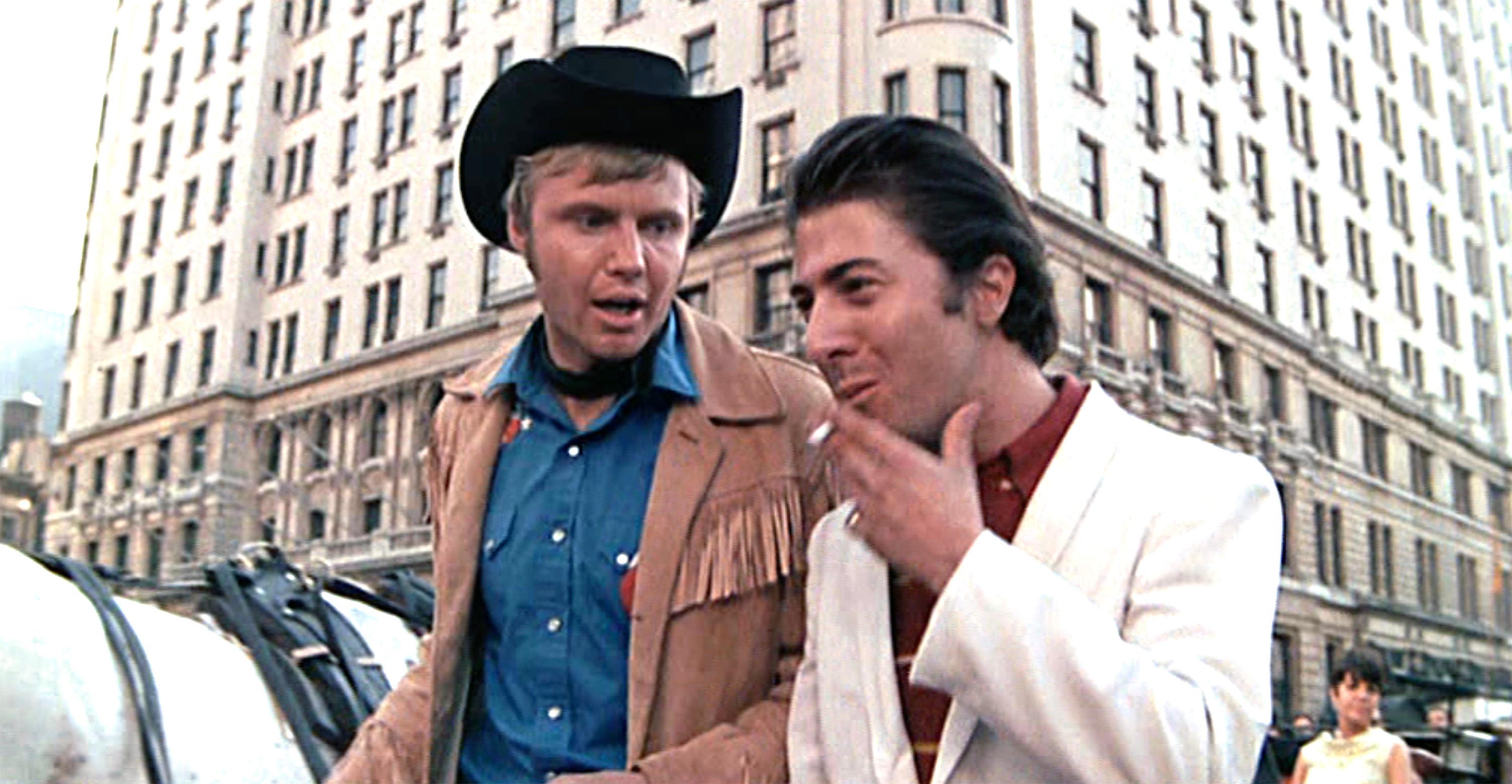
The late ‘60s marked the death of the Hays Code and the death of the American cowboy as a symbol of masculinity. Joe Buck is a naïve, wide-eyed, blonde-haired cowboy fan from Texas who feels stuck at his dead-end dishwashing gig. He leaves for New York, hoping to satisfy lonely and wealthy women as a male prostitute, dressed like his childhood idols. His dreams of working as a hustler and the joy with which he approaches his journey represent those of aspiring actors and singers, but he instantly realizes that making it big in the city is a ruthless grind. The American cowboy is confronted with the postmodern age, exploited, emasculated, made into a Warholian caricature through feverish psychedelic juxtapositions and oedipal traumas. “Are you saying John Wayne’s a f*g?” He eventually neuters himself in an attempt to return to modernism in a shell of rayon and polyester, but there’s no going back to the old world. Even the 42nd Street that Joe wanders along is long gone—once lit with sooty neon and packed with porn palaces, pawnshops, con men, and fleabag hotels, and now sanitized by a massive corporate-friendly rebrand. But people still flock to the Big Apple with unfillable hopes and wind up living on or over the edge of desperation.
On his way to New York, Buck listens to a radio show in which women describe what kind of man they’re looking for, which only fuels his fantasies of luck and prosperity. He anticipates that his only talent—“lovin’”—will be appreciated by affluent women on the Upper West Side, but it never occurs to him that hustling on the New York streets is an unglamorous lifestyle and there aren’t many ladies willing to be seduced and billed afterwards, especially by someone in cowboy attire. Given his branding and line of work, gay men would be a much more suitable and willing clientele, something that Joe only passingly acknowledges when he alludes to “tutti fruities” before he leaves his hometown. As we journey a vérité through flashbacks, head trips, and dream sequences, and occasional hallucinatory use of black and white, the film is most effective when we observe Joe on the streets, especially in a wordless sequence in which he eyes other handsome cowboy-hatted hustlers, realizing he’s a dime a dozen. On the verge of homelessness, he serendipitously encounters “Ratso” Rizzo, a homeless, limping conman who’s ostracized in his own city and dreams of moving to Florida. Joe starts to believe that his fortunes are changing, and he finds his manager, only for their business relationship to get off to a rough and fraudulent start. The two men wind up squatting together in an abandoned building with no electricity or heat, seldom earning a buck or two thanks to Rizzo’s pickpocketing talents. Joe’s hustling career struggles to take off, with him managing to arrange just a couple of hook-ups, two of which are with men and none of which end happily for Joe and the other person.
The way Joe and Ratso are bonded informs everything that happens in Midnight Cowboy. Both friends are seeking validation. Joe feels like he has outgrown his hometown and sees himself as special and alluring, and is devastated to find out that he’s a nobody in a big city. Ratso, as the son of a shoe shiner, lacks self-esteem despite his tough-guy bravado; he wants to be seen for more than his low-rent financial status. For the small-town Texan, New York is the land of Oz, while Florida is the promised land for the Bronx-born Ratso. The oranges-and-sunshine posters he has tacked up on the walls of his dilapidated unit are the only splashes of non-lurid color in his begrimed life. As they navigate the hellscape they find themselves in, they alternately sustain and shatter their delusions: As Joe sees himself as a stud, Ratso sees himself as a player with knowing advice about what women want and how to work the game. As they make their way into an abandoned tenement, they walk through a torn chain-link fence, and Ratso airily states, “I got my own private entrance here,” and insists he be called Rico “in my own goddamn place.” But this home is where they strip away each other’s vanities and tear into each other most harshly. “That great big dumb cowboy crap of yours don’t appeal to nobody!” Rico tells Joe. “What the hell do you know about women anyway?” Joe throws at him. “I bet you ain’t never even been laid!”
As these two characters endure marginalization and poverty, loneliness oozes out of every portrayal of New York. It’s a never-ending maze of streets, bridges, and shops. Lonely souls wander like ghosts. Every block has an endless procession of suffocating traffic. Not everything shines bright. New York is a beast that can swallow anyone whole, and forgotten dreams drift away like a breeze, leaving us in the physical and mental cold. The extent of Joe’s and Ratso’s poverty is sustained because of their delusions of a bright future, slightly out of reach but still attainable. It keeps their crippling loneliness at bay and enables them to hold onto their sanity and will to live. Their precarity is an unflinching and heart-wrenching portrayal of homelessness: There is no catharsis or triumph, just a journey through their shoes.
Joe wears his identity as a costume, presenting his southern upbringing as a character. He performs the cowboy schtick because he’s convinced it will attract women, and it winds up alienating him. He escapes Texas for a better life, but that’s the only life he knows, using his past as a way to market himself. For a city that was historically the entry point for immigrants into America, a cosmopolitan metropolis brimming with multiculturalism, he finds that New York doesn’t encourage personal expression; it just rewards capitalistic conformity. He makes several connections, but closes himself off unless there’s monetary gain; his naivety is turned into greed as his moral compass fades into the vicious underbelly of New York, without him even realizing it. Ratso’s identity is also tied to his hometown, as he prides himself on walking and talking like a New Yorker, clearly proud of his city and disgusted with the people who live in it. He’s jaded and untrusting. His tough-guy mask finally slips on the bus to Miami, terrified that his future will resemble his past: The city he grew up in rejected him, and his last move is to leave it.
Given that director John Schlesinger was openly gay in the ‘60s, there are clear themes of masculinity and sexuality, but it’s not clear whether Joe and Ratso share any sexual relationship or desire. It is ironic that they first meet at what appears to be a gay bar, or at least a venue where gay men seem to be comfortable patronizing. Ratso, with his implied virginity, seems to live in a constant state of gay panic. His prolific use of homophobic epithets seems to be a pathetic assertion of his place in the pecking order, and it is often greeted with revelatory indifference by at least one of its targets. Joe is likely a bisexual man with issues of toxic masculinity, internalized homophobia, and repressed trauma from the sexual abuse he suffered from his grandmother and her boyfriend. He came to New York specifically to pursue older, wealthy women who could take care of him financially, and perhaps seeking care and comfort as well. It isn’t a coincidence that the first female he sleeps with in New York is an older prostitute who resembles his grandmother. Joe seems to accept that turning tricks with gay men is an inevitable aspect of his job—$20 is $20, after all—but his transactional view of sex, combined with his trauma and homophobia, causes him to lash out at the quivering dweeb in the movie theater and have an internal meltdown after the light-up Jesus in that Evangelical man’s apartment. Joe doesn’t seem to understand sex as an act of intimacy, other than flashes of it with his girlfriend, but that seems to be irreparably damaged after surviving rape. The way the film is edited is a masterpiece in depicting C-PTSD, and it shows that Joe is tragically doomed to be like this, even if he ever got out of prostitution. The hug between Joe and Ratso in the stairwell was devastating, the desire to be affectionate towards a platonic male friend. Ratso is alienated from the conventional masculinity that Joe embodies, but also limits him from embracing his sexuality.
Two men of different origins bought into the American dream and wound up in the same predicament. The system relies on the Joe Bucks and Ratso Rizzos to keep easy marks believing in these dead-end dreams, even when every speck of hope is instantly dashed. Joe sees an ad on a diner window stating “dishwashers needed” before making eye contact with a handsome, blonde dishwasher, seeing himself in him, and assumes they have a similar backstory—coming to the city with a big dream and wound up with the same job he had in his hometown. Joe sees this guy as a failure. He didn’t leave Texas to get back to his previous job, even if menial jobs were the only ones available to him. He still harbors the dream of becoming a hustler. Is there any redemption for Joe? The movie ends with him cradling Ratso tenderly on a southbound bus to Miami, and the last sentence is. “Because of course he was scared now, scared to death.” Ratso’s journey is over, and Joe’s is more ambivalent, on the precipice of discovering his own humanity.
That’s it for this week’s instalment of The Watchlist, brought to you by Beaglesgate Productions.
Next week, we’ll be diving into the Struggling Artist. In the meantime, let me know your thoughts on these movies, where they place among your personal favorites, or if you think they’re overrated.

Two words: Orville Peck
It’s not exactly a cowboy movie, but The Last Picture Show lines up perfectly with the theme you’re going for here. In fact I believe Red River is the “picture show” referenced in the title.